
MAX809TTRG Datasheet: Features, Applications, and Design Considerations
The MAX809TTRG is a prominent microprocessor supervisory circuit designed to monitor power supply voltages in digital systems. It provides a critical function: ensuring a system operates correctly by monitoring its power source and initiating a reset sequence during power-up, power-down, or brownout conditions. This article delves into its key features, diverse applications, and essential design considerations.
Key Features
The core functionality of the MAX809TTRG is defined by a set of robust features. It is engineered to monitor 3V, 3.3V, and 5V power-supply voltages—the most common voltage levels in modern digital electronics. A primary feature is its manual reset input, which allows an external switch to force a reset, providing flexibility for system debugging and user control. The device boasts an active-low, open-drain reset output (RESET), which can be connected to the reset pin of a microprocessor, microcontroller, or FPGA.
Internally, it utilizes a precision voltage monitor that compares the VCC input against a fixed factory-trimmed threshold. When VCC falls below this threshold, the reset output is asserted. It remains asserted for a minimum period, typically 140ms after VCC has risen back above the threshold, ensuring the power supply and system clock have stabilized. This device is also noted for its low supply current, consuming only a minimal amount of power, which is crucial for battery-powered applications.
Primary Applications
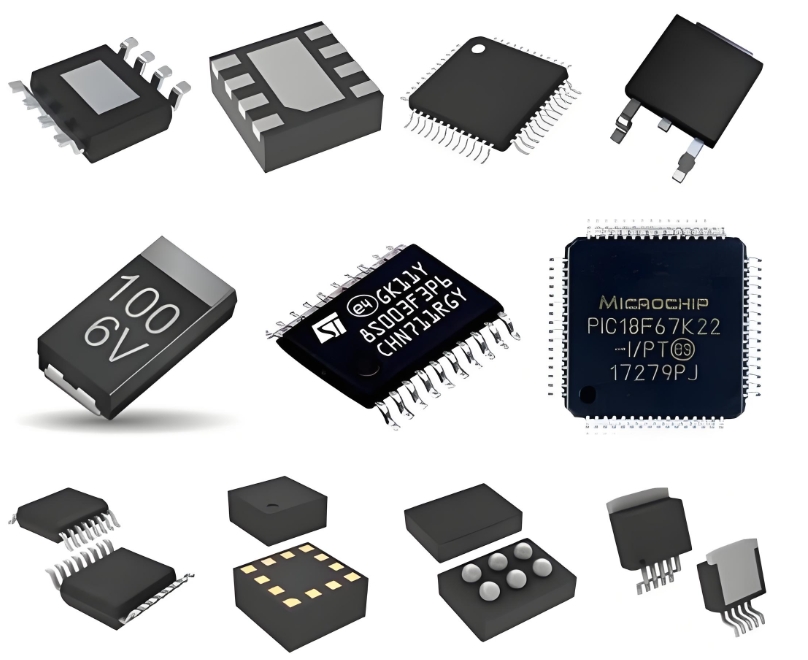
The MAX809TTRG finds its purpose in a vast array of electronic systems where reliable operation is non-negotiable. Its most common application is in microprocessor and microcontroller-based systems, including embedded controllers, intelligent instruments, and automotive systems, where it guards against spurious code execution during unstable power conditions. It is equally vital in computer peripherals such as printers, scanners, and external hard drives.
Furthermore, it is extensively used in critical industrial control systems, robotics, and telecommunications equipment like routers and switches. Any application utilizing an FPGA or DSP can benefit from the MAX809’s reset functionality to ensure a known start-up state. Its simplicity and reliability also make it a staple in consumer electronics, from smart home devices to set-top boxes.
Crucial Design Considerations
Integrating the MAX809TTRG into a design requires attention to several key factors. First, selecting the correct reset threshold voltage variant is paramount; choosing a 4.38V threshold for a 5V system or a 2.93V threshold for a 3.3V system ensures proper monitoring. Second, the open-drain RESET output requires an external pull-up resistor. The value of this resistor (typically between 10kΩ and 100kΩ) forms a pull-up network that must be compatible with the logic family of the monitored processor.
Designers must also consider the power supply sequencing in multi-voltage systems. A single MAX809 may not suffice if multiple voltage rails require monitoring; in such cases, a multi-voltage supervisor or multiple MAX809s might be necessary. Finally, bypass capacitors (a 0.1µF ceramic capacitor placed as close as possible to the VCC pin) are essential for stabilizing the supply and filtering out noise that could cause false reset triggers.
ICGOOODFIND: The MAX809TTRG stands as a fundamental component for enhancing system reliability. Its simplicity, low power consumption, and focused functionality make it an excellent and cost-effective choice for ensuring controlled system start-up and operation across a tremendous range of applications, from consumer gadgets to industrial machinery.
Keywords: Microprocessor Supervisory Circuit, Voltage Monitoring, Reset Circuit, Brownout Detection, Open-Drain Output.

